Should You Stain or Seal Your Fence Before Winter Hits?
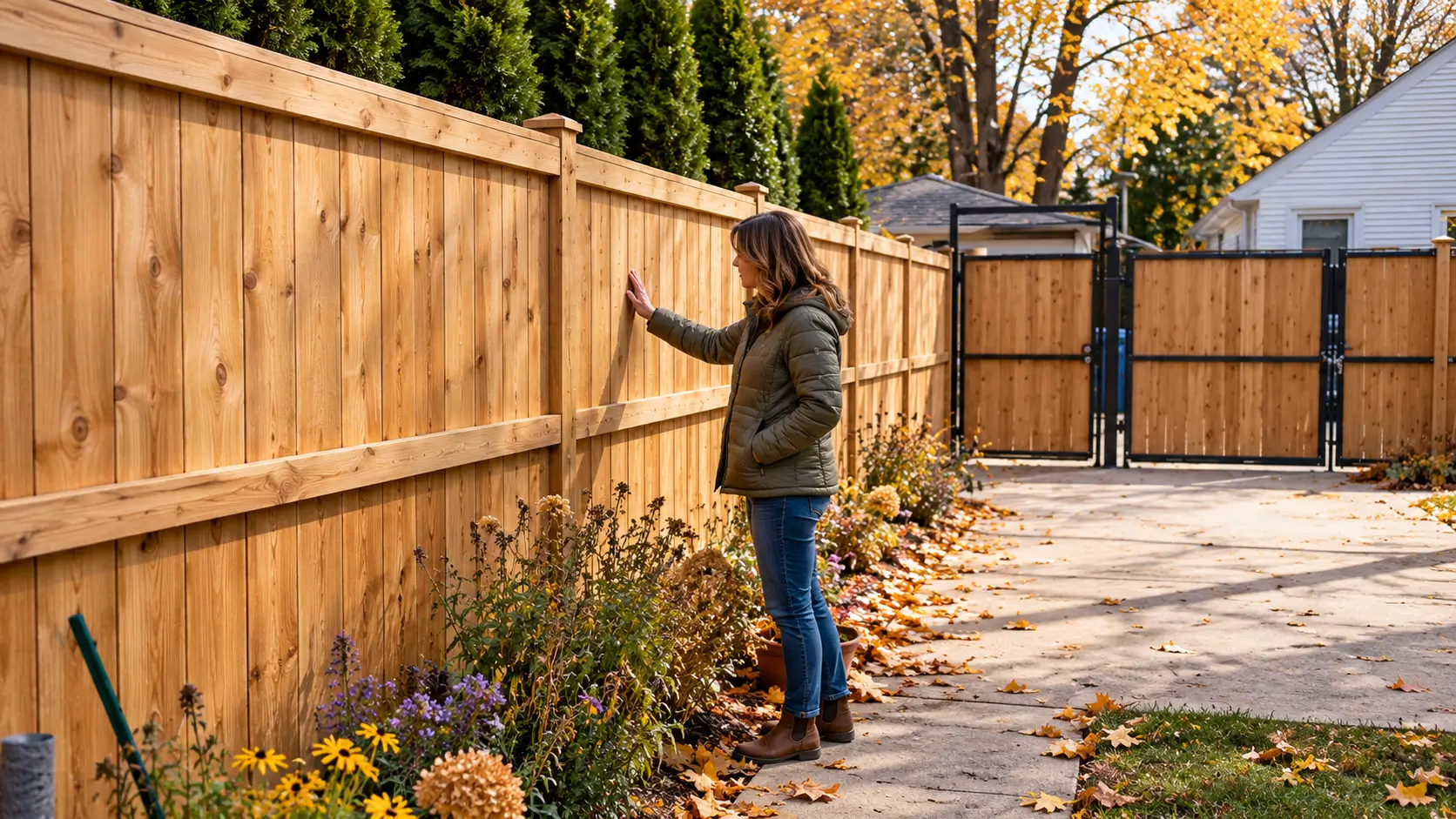
Stain adds color and can improve UV protection, while sealer primarily helps reduce moisture absorption. Neither belongs on wet, dirty, rotten, or unstable wood. Before you seal your fence or finish a new wood fence installation, inspect the wood, identify any existing coating, and confirm suitable application conditions.
Oak Park and Chicago-area homeowners face colder nights, morning dew, and unpredictable late-fall rain. Rushing a coating job can cause poor adhesion or incomplete curing.
The right sequence is to inspect, repair, prepare, check the weather, and coat only when conditions permit. Our wood fencing options help homeowners balance privacy, security, and appearance. Suburban Fence Inc. has served Chicagoland since 1977.
Table of Contents
Should You Seal Your Fence Before Winter?
Apply a finish only when the wood is sound, clean, sufficiently dry, and compatible with the selected coating.
Light surface weathering may need cleaning and preparation. Peeling finishes require removal of failed material. Rotten boards, loose rails, and unstable posts need repairs before coating.
A finish helps protect suitable wood. It cannot restore structural strength. That distinction matters more than the calendar when planning winter fence protection.
Stain Versus Sealer: What's the Difference?
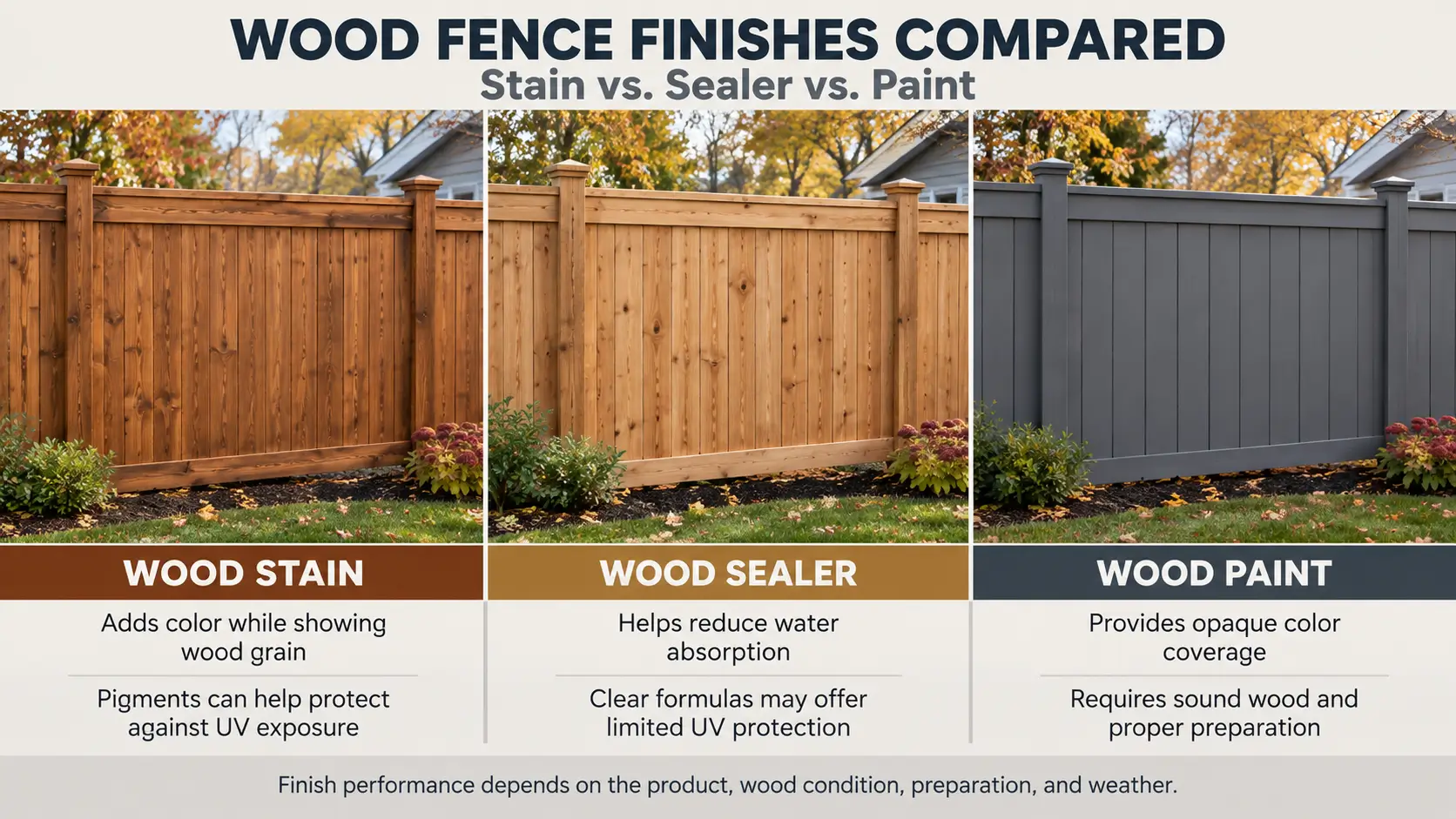
Sealer helps limit water absorption. Stain adds pigment, which can improve protection against sunlight. Some products combine both functions.
Clear finishes preserve a natural appearance but may provide less UV protection than pigmented alternatives. Semi-transparent stains allow the grain to remain visible. Solid-color stains offer more uniform coverage.
Paint creates an opaque film, although preparation and maintenance requirements vary.
No coating repairs rot or makes damaged fencing structurally sound.
Signs Your Fence Needs Refinishing
Fading, exposed wood, peeling, and uneven water absorption may indicate a worn finish.
Inspect boards near sprinklers, shaded areas, and sections exposed to strong sunlight. A peeling fence finish needs appropriate preparation before recoating.
Gray boards can remain structurally sound. Soft wood, deep splits, loose rails, and moving posts require attention before finishing.
Repair Damaged Wood Before Coating
We recommend checking posts, rails, boards, gates, and drainage before investing in a new finish.
| Fence condition | Recommended action |
|---|---|
| Clean, dry, sound wood | Consider coating when conditions permit |
| Light weathering | Prepare and test |
| Peeling finish | Remove failed coating |
| Loose board or rail | Repair first |
| Rotten wood | Replace affected components |
| Moving post | Have stability evaluated |
| Sagging gate | Examine alignment and hardware |
| Water near posts | Investigate drainage |
A worn board may need a limited repair. Widespread rot or several unstable posts may justify replacement.
Our Fall fence weatherproofing guidance also addresses drainage and prolonged moisture exposure.
How Cold Is Too Cold to Stain or Seal Wood?
The correct sealing temperature depends on the specific coating and expected weather.
BEHR publishes the following application guidance for three DECKplus exterior wood finishes:
- Transparent Waterproofing Wood Finish, Clear No. 400: Published application range of 40–90°F, no rain expected within 24 hours, recoating after 1–2 hours, and full cure after 72 hours.
- Semi-Transparent Waterproofing Wood Stain, No. 3077: Published application range of 40–90°F, no rain expected within 24 hours, recoating after 1–2 hours, and full cure after 72 hours.
- Solid Color Waterproofing Wood Stain, No. 211/213: Published application range of 40–90°F, no rain expected within 24 hours, recoating after 1–2 hours, and full cure after 72 hours.
These are product-specific published figures, not universal coating rules. Confirm the current technical data sheet and container instructions before application. The stated temperature ranges do not independently establish separate air and wood-surface limits.
Check wood dryness, expected rainfall, overnight dew or frost, and any additional curing requirements. Cooler temperatures and higher humidity may extend drying times.
Can You Seal Your Fence During a Cold Spell?
Only when the selected product permits it and the wood is ready.
A mild afternoon can be followed by dew or frost. Postpone application when the complete drying and curing window cannot meet the manufacturer’s requirements.
Why Existing Coatings Matter
A new finish must be compatible with the coating already on the fence.
Existing water-repellent treatments may interfere with another product’s adhesion or penetration. Failed solid-color finishes require appropriate removal. Penetrating stains may not work over intact film-forming coatings.
Previously painted wood: Check for peeling, cracking, and trapped moisture. Remove failed coating as required by the new product’s instructions. A penetrating stain may not be suitable over intact paint, so verify compatibility before selecting a finish.
Identify the old coating whenever possible and test the proposed finish on a small, inconspicuous area.
Prepare Your Fence Before Applying a Finish
Preparation begins with repairs, cleaning, and sufficient drying.
Coating-Readiness Checklist
- Repair damaged boards, rails, and hardware.
- Remove dirt, mildew, leaves, and debris.
- Trim vegetation touching the fence.
- Remove loose or peeling coating.
- Identify the existing finish.
- Confirm product compatibility.
- Allow the wood to dry sufficiently.
- Confirm suitable weather and curing conditions.
- Protect nearby plants and neighboring property.
- Test the finish on a small area.
A practical fence sealing guide should address preparation, not just application. Aggressive pressure washing can damage wood fibers and leave boards too wet to coat.
Which Wood Finish Should You Choose?
The best wood stain depends on the appearance you want, the existing coating, and the condition of the boards.
Natural wood appearance: A clear or lightly tinted product may be appropriate when preserving the grain is the priority.
Visible grain with added color: Semi-transparent stain can balance appearance and pigment-based protection.
Uniform opaque finish: Solid-color stain or suitable exterior paint provides greater color coverage, but existing coatings and preparation requirements matter.
Before you seal your fence, confirm that the product suits the wood, existing coating, and expected weather.
How Fence Age Affects Finishing
New wood: Fresh lumber may require drying time. Finishing after a wood fence installation should follow the manufacturer’s instructions rather than a fixed waiting period.
Previously coated wood: Identify the existing finish before choosing another product.
Weathered wood: Gray color alone does not mean the fence has failed. Wood fence warping can develop with uneven moisture changes, so distorted boards deserve attention before refinishing.
Common Finishing Mistakes
Coating damp wood, covering rot, using incompatible products, and overlooking overnight frost can cause poor results.
Heavy coats, inadequate drying, and skipped test areas may also lead to uneven coverage or peeling.
Protect sound wood. Repair damaged wood. Never use a coating to hide structural failure.
DIY Finishing or Professional Fence Repair?
DIY coating may suit a sound, accessible fence when the existing finish is known and the product instructions can be followed safely.
Read the label and safety data sheet. Wear appropriate protective equipment, avoid unsafe ladder work, and prevent overspray or runoff from reaching neighboring property, vehicles, plants, or drains.
Moving posts, rotten boards, failing rails, and sagging gates require structural attention. We install and repair wood fencing; staining and sealing are separate maintenance decisions.
How We Help Chicagoland Homeowners
Since 1977, we’ve built and repaired fences for Chicagoland properties. Our custom wood fencing includes Western Red Cedar options designed around privacy, security, and appearance.
Our family-owned fencing company focuses on fencing solutions suited to each property.
Faded boards do not automatically justify replacement. Widespread rot, unstable posts, and repeated structural failures call for a different decision.
We help homeowners consider whether fence repair or replacement is appropriate.
Frequently Asked Questions
Is stain better than sealer?
Stain adds color and may provide greater UV protection. Sealer primarily reduces moisture absorption, although formulations vary.
Should I stain my fence before winter?
Only when the wood is sound, prepared, sufficiently dry, and within the product’s weather requirements.
Can I seal wood in cold weather?
Some products permit cooler-weather application. Follow the exact product instructions.
Will sealer stop wood rot?
No. Rotten components require repair or replacement.
How do I know whether wood is dry?
Follow the coating manufacturer’s moisture requirements. A moisture meter may help when a measurable limit is specified.
Can I stain over an existing sealer?
Only when the products are compatible and the surface is properly prepared.
When should I call a fence contractor?
Moving posts, rotten boards, failing rails, and sagging gates warrant professional attention.
Make the Right Fence Decision Before Winte
Before you seal your fence, inspect the wood, identify existing coatings, complete necessary repairs, and confirm suitable weather.
We install and repair custom wood fences throughout Oak Park, Chicago, and nearby communities. Get a wood fence quote to find out how we can help with your property’s fencing needs.