When Is the Best Time to Schedule Fence Work in Winter?
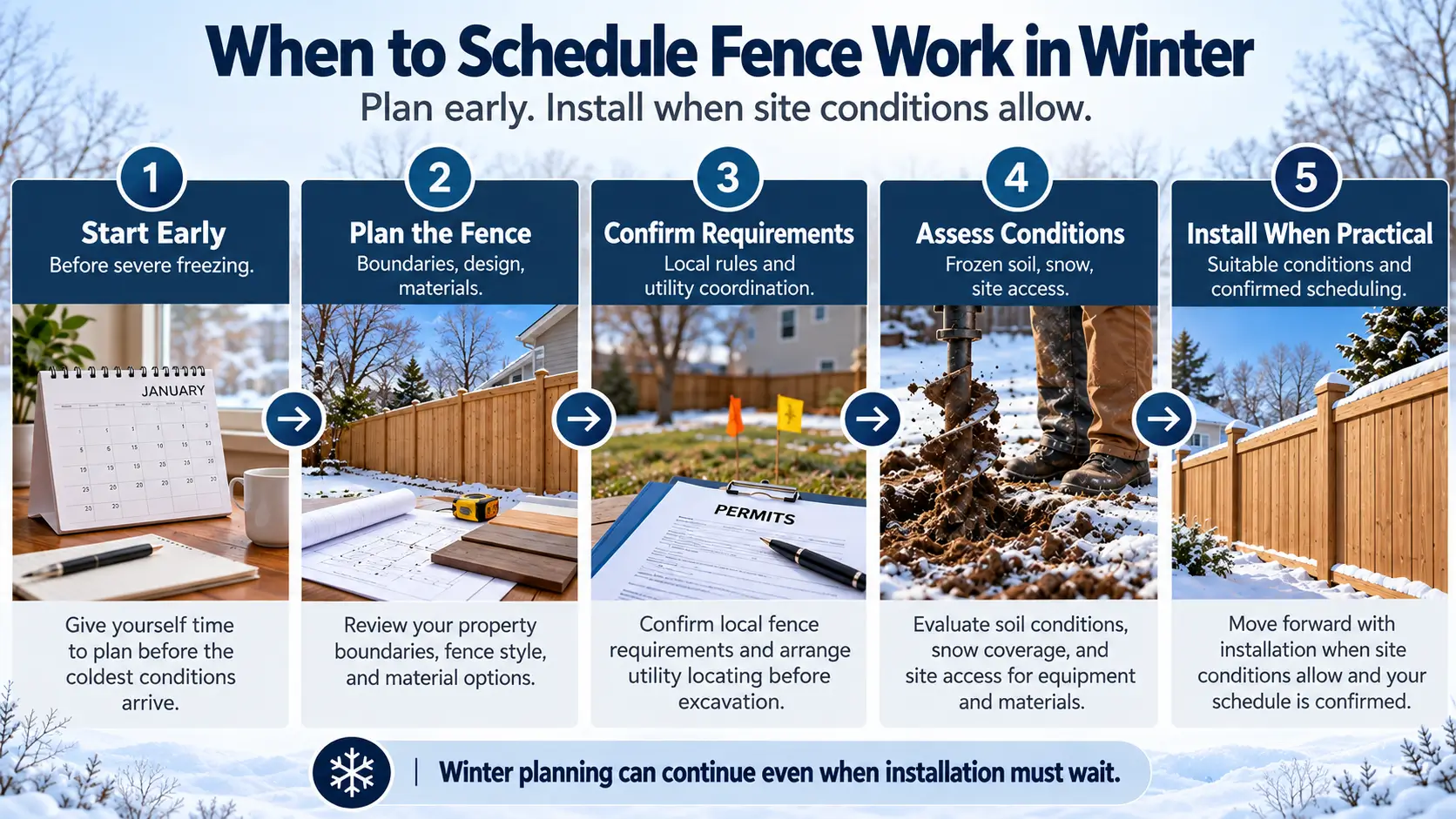
The best time to schedule fence work is before heavy snow and deep freezing make site access difficult. For a spring installation, winter is a practical time to request an estimate, review the fence layout, and confirm permit requirements. Winter installation may also be possible, but the contractor must first assess soil conditions, weather, and access.
Homeowners searching for fence installation near me can begin planning before an installation date is available.
A typical project moves from initial contact and property review to design, approvals, material selection, and installation. These stages may happen on different dates.
Suburban Fence has served Chicagoland since 1977. Our residential fencing services include fencing for privacy, security, and property improvements in Oak Park, Chicago, and surrounding communities.
Table of Contents
When Should You Schedule Fence Work?
Begin planning before the first major freeze. The project’s urgency determines what should happen first.
- Spring installation: Settle the layout and materials during winter.
- Winter installation: Discuss site conditions before severe freezing.
- Fence replacement: Identify damaged or unstable sections promptly.
- Privacy upgrade: Confirm height, boundaries, and gate locations.
- Gate replacement: Prioritize access and security concerns.
- Storm damage: Assess the fence when conditions are safe.
- New-home fencing: Gather survey and HOA documents.
Urgent repairs, particularly damaged gates or unstable fencing, should be assessed when conditions are safe. Planned spring installations offer more time to review design and material choices. In either case, a contractor should confirm the construction window after assessing the site, requirements, and weather.
Ask which date is being confirmed. An estimate appointment, material order, tentative installation window, and confirmed construction date are different milestones. Clarifying each one helps homeowners plan landscaping, property access, and other improvements without assuming the fence will be installed on the consultation date.
What Can Be Planned During Winter?
Property boundaries, fence design, materials, and local requirements can be addressed before excavation.
The Village of Oak Park’s fence guidelines address permit applications, fence placement, height, and certain repair exceptions. Chicago has separate building-permit procedures. Requirements depend on the property and proposed work, so confirm the applicable rules before construction.
Winter Fence Planning Checklist
- Locate the property survey or plat.
- Confirm boundaries and HOA restrictions.
- Photograph existing fencing and gates.
- Identify access routes and drainage concerns.
- Confirm permit responsibility.
- Identify known private utilities.
- Note removal and disposal needs.
- Ask about material availability.
- Discuss preferred timing and weather delays.
Old concrete footings, narrow access, and uncertain boundaries can complicate replacement work. Our fence upgrade preparation advice explains these considerations.
Why Plan Before Spring?
Winter planning provides time to finalize the fence’s purpose, layout, and materials before spring.
Potential winter installation benefits include more time to compare options and coordinate fencing with landscaping or patio improvements.
Scheduling flexibility is not guaranteed. Homeowners who schedule fence work early can clarify the project without assuming an immediate installation date.
Which Winter Conditions Delay Installation?
Ground conditions, safe access, and product requirements determine whether winter installation is practical.
Snow, ice, strong winds, and severe cold can create outdoor hazards. The National Weather Service provides Chicago-area winter weather safety guidance relevant to site access and worker safety.
| Condition | Installation concern | Appropriate response |
|---|---|---|
| Surface frost | Harder excavation | Assess ground and equipment |
| Deeply frozen soil | Excavation may be impractical | Delay or reassess |
| Heavy snow | Hidden fence line and hazards | Restore visibility or wait |
| Ice | Unsafe access | Postpone until safe |
| Saturated soil | Footing and access concerns | Reassess drainage and stability |
| Strong winds | Unsafe panel handling | Pause affected work |
| Severe cold | Worker and product limitations | Follow safety and product requirements |
| Active storm | Unsafe conditions | Reschedule |
Can Fence Posts Be Installed in Frozen Ground?
Sometimes. Cold-weather post installation depends on workable soil, the footing system, applicable requirements, and manufacturer instructions.
Homeowners should not assume frozen soil is safe to excavate simply because the fence line remains visible. Underground utilities, property boundaries, frost depth, and footing requirements must be assessed before digging.
Practical frozen ground tips include identifying drainage concerns and leaving excavation decisions to qualified installers.
Utility-location requests must be coordinated before excavation. Oak Park uses JULIE’s Illinois utility-location service, while Chicago uses its separate 811 Chicago service. Privately owned lines may require separate locating.
How Do Fence Materials Affect Winter Timing?
Material choice affects handling, installation, maintenance, and finishing requirements. The most suitable option depends on the property’s needs, local conditions, and the selected product’s instructions.
Wood and Vinyl Fencing
Our wood fencing options offer a natural appearance and design flexibility. Winter planning should account for moisture, material handling, and finishing conditions. Staining or sealing must follow the selected coating manufacturer’s instructions.
Vinyl fencing offers a low-maintenance alternative for privacy and property definition. Cold-weather handling and installation must follow the selected product’s instructions, particularly when working with panels, posts, and fittings.
Chain Link, Metal, and Composite Fencing
Chain-link fencing requires properly set posts and correctly tensioned fabric. Frozen soil and restricted access can complicate post installation.
Aluminum and steel fences depend on accurate alignment, secure hardware, and properly installed gates. Winter conditions may affect access and the work needed to establish stable footings.
Composite fencing has product-specific installation requirements, including any applicable temperature and handling limitations. Confirm those requirements before scheduling construction.
Are Winter Fence Discounts Available?
Off-season fence discounts are possible, but winter does not guarantee lower prices.
Fence length, materials, gates, removal, permits, and access affect costs. Frozen ground may increase installation difficulty.
Ask how long the quote remains valid, whether materials are reserved, and how removal, disposal, permit costs, or weather-related changes affect the approved scope.
Does Contractor Availability Improve in Winter?
Contractor availability may improve outside peak season, but installation openings are not guaranteed.
Existing projects, storm repairs, deliveries, and weather delays affect scheduling.
Before confirming a project, ask how delays are communicated and when postponed installation can be rescheduled.
How Should You Prepare Your Property?
Accurate property information and clear access help reduce preventable delays.
Move lightweight items away from the proposed fence line. Identify private irrigation lines, outdoor lighting, drainage concerns, and existing gates.
A damaged gate affecting security may need faster attention than a planned privacy fence. Leave boundary markers undisturbed and avoid unsafe excavation.
What Does a Winter Fence Project Timeline Look Like?
A winter fence project involves separate planning, approval, and installation phases.
- Early contact: Discuss project goals, materials, photographs, and preferred timing.
- Property review: Consider survey information, fence lines, gates, access, drainage, and removal.
- Requirements and design: Identify municipal and HOA requirements and finalize the proposed design.
- Quote and approval: Confirm scope, exclusions, estimate terms, and weather-delay arrangements.
- Installation window: Coordinate utility marking and confirm suitable site and weather conditions.
- Final review: Check alignment, gates, hardware, cleanup, and weather-sensitive finishing requirements.
These phases describe a general project sequence, not a guaranteed schedule. Homeowners can begin planning fence work during winter while keeping the installation date flexible.
How Can Suburban Fence Help?
Suburban Fence provides residential and commercial fencing for privacy, security, and property improvements throughout Chicagoland.
Our fencing options include wood, vinyl, chain link, aluminum, and steel. For projects involving custom vinyl gates or nonstandard fence layouts, discuss dimensions and component requirements during the initial consultation. Confirming those details early helps identify design decisions and material needs before an installation window is selected.
We also provide fence installation in Oak Park and surrounding communities. Specific winter installation procedures and availability must be confirmed for each project.
What Should You Discuss With a Fence Contractor?
Ask about the fence’s purpose and height, property boundaries, existing structures, gates, drainage, removal, and material preferences. Confirm who handles approvals and utility coordination, what the estimate includes, and how weather-related scheduling changes are managed.
Winter Fence Scheduling FAQs
What is the best month to plan winter fence work?
A: Early winter, before heavy snow and deep freezing restrict access. No month guarantees suitable installation weather.
Can fence posts be installed in frozen soil?
A: Sometimes. Soil, footing requirements, equipment, manufacturer instructions, and safety determine feasibility.
Is winter fence installation cheaper?
A: Not necessarily. Pricing depends on the project and any confirmed seasonal offer.
Are fence contractors less busy in winter?
A: Availability varies with existing projects, repairs, and weather delays.
Can vinyl fencing be installed in cold weather?
A: Potentially, when site conditions and manufacturer instructions allow.
Should spring fence projects be planned during winter?
A: Yes. Boundaries, design, materials, and local requirements can be addressed early.
When should I seek a fence estimate?
A: Once the fence’s purpose, location, and approximate layout are clear.
Know When to Plan and When to Install
Winter is a practical time to plan fence work, even when installation must wait for suitable conditions.
Before requesting an estimate, gather your approximate fence layout, preferred material, property survey if available, and photos of existing fencing. These details give Suburban Fence a useful starting point for discussing your project.
Ready to plan your fence project? Contact Suburban Fence to discuss your fencing needs and preferred installation timing.