Residential Fence Visibility & Lighting: Keep Your Property Safe This Fall
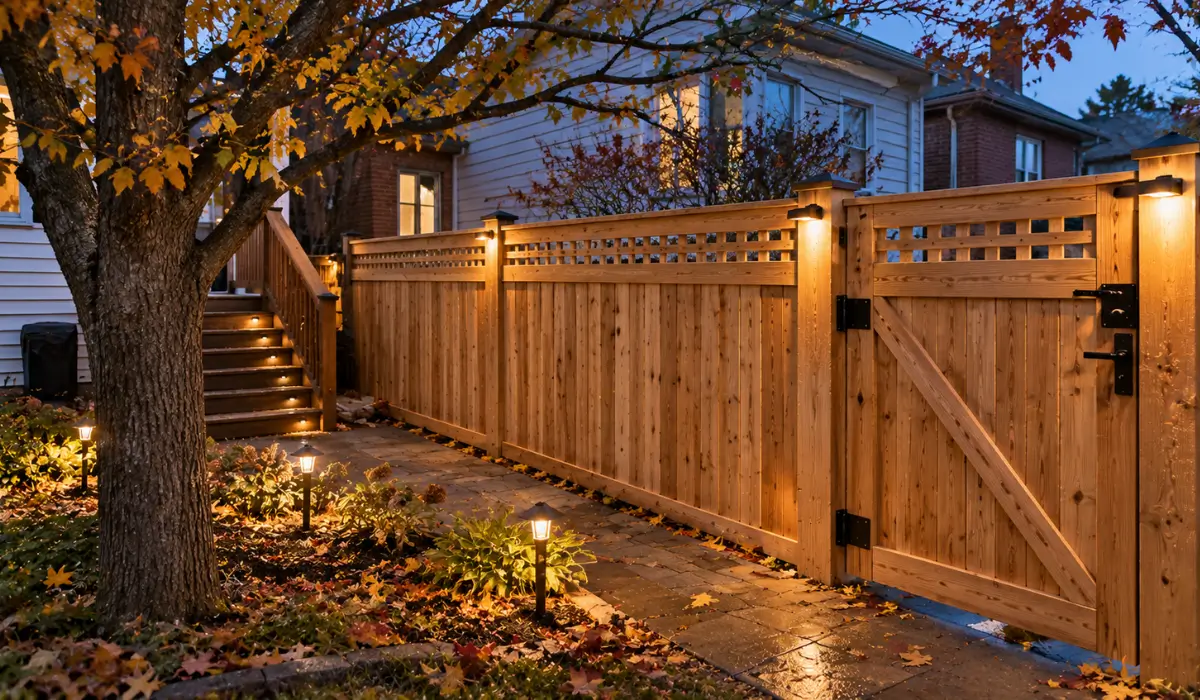
A well-planned residential fence lighting approach should make gates, paths, steps, latches, and property edges easier to see without creating glare or new hazards. A residential fence contractor can assess the boundary and gate layout, while a qualified lighting or electrical professional can address fixtures, power, and permanent wiring.
Shorter days make wet leaves, uneven ground, dark gates, and steps harder to see. Oak Park and Chicago-area properties may also have alleys, narrow side yards, detached garages, and gates away from the main entrance.
Start by mapping dark zones, prioritizing hazards, comparing lighting choices, and checking existing structures. Our residential fencing options can help when a gate, post, or panel needs attention.
Table of Contents
Why Does Fence Visibility Matter More in Fall?
Shorter daylight hours can make gates, steps, grade changes, latches, landscaping, and damaged sections harder to see during normal evening use.
Earlier sunsets, rain, wet leaves, pets, visitors, and driveway or alley traffic can create visibility problems. Loose boards, sharp hardware, unstable posts, and failed latches need repair rather than brighter lighting.
Local Conditions Around Oak Park and Chicago
Alleys, mature landscaping, detached garages, and narrow side yards can affect where light is useful. Plan around the property’s actual routes and access points.
How Do You Complete a Nighttime Visibility Audit?
A visibility audit shows where people walk, enter, turn, unlock gates, move vehicles, or encounter elevation changes after dark.
- Walk the property shortly after sunset.
- Follow routes used by residents, visitors, pets, and service providers.
- Mark dark gates, steps, corners, paths, and uneven ground.
- Note glare, shadows, structural damage, and blocked views.
- Photograph concerns and rank them low, medium, or high priority.
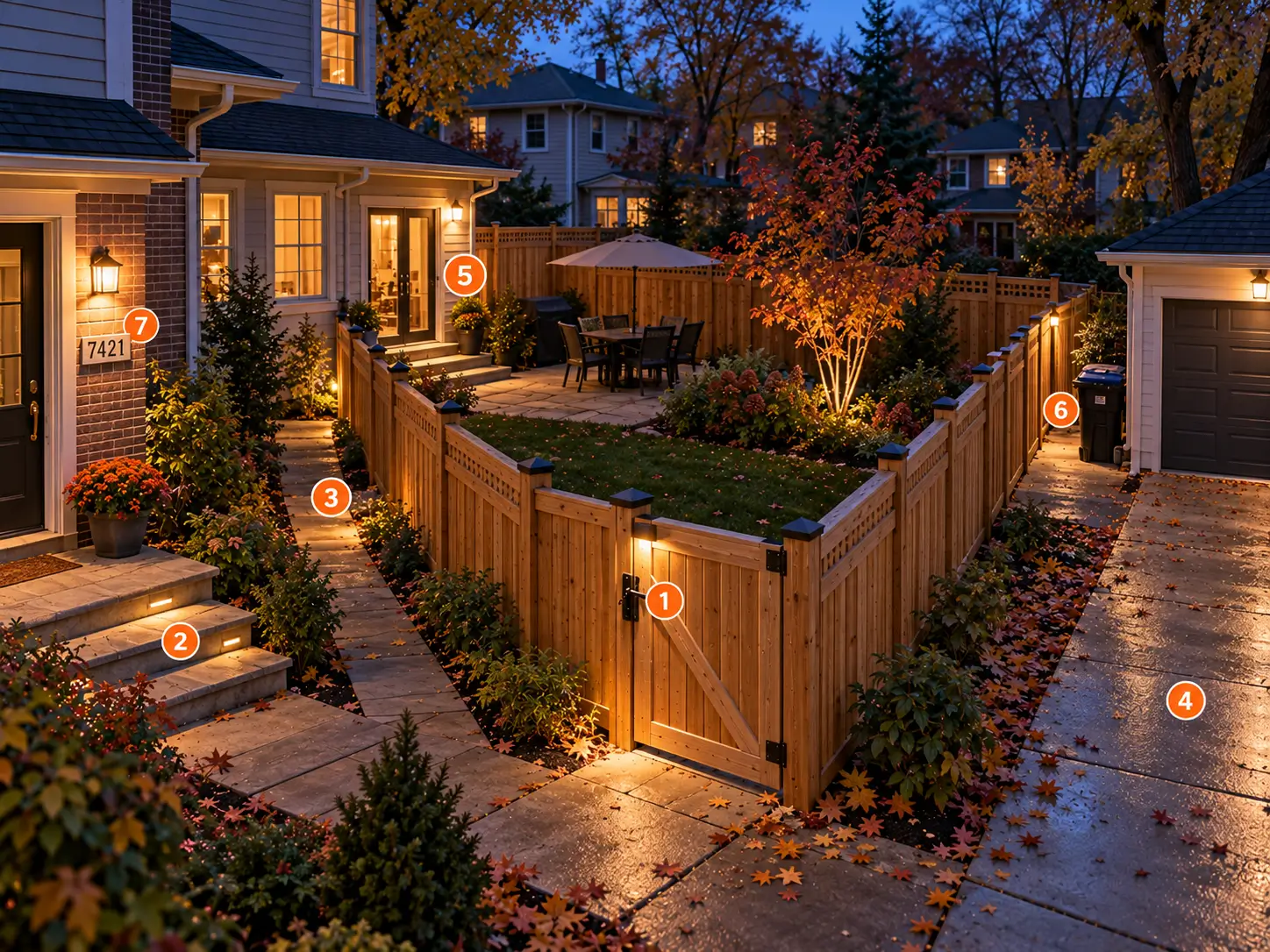
Check front, side, and rear gates; latches; steps; walkways; driveways; garage and trash routes; patios; play and pet areas; corners; grade changes; house numbers; existing fixtures; and damaged posts, panels, or hardware.
Fall Fence Visibility & Lighting Checklist:
Record routes, dark areas, gate concerns, structural condition, glare, fixture ideas, and contractor questions.
Where Is Fence Lighting Most Useful?
Light the task or hazard before adding decorative fixtures.
| Location | Purpose | Watch For |
|---|---|---|
| Gate/latch | Easier entry | Eye-level glare |
| Steps/grade | Show elevation changes | Walking clearance |
| Side path | Improve visibility | Deep shadows |
| Driveway/alley | Improve driveway visibility | Drivers, neighbors |
| Patio entrance | Define the transition | Existing ambient light |
| Trash/service route | Improve routine access | Weather exposure |
| House number | Improve identification | Obstructions |
Gates, steps, paths, and access points should generally take priority over decorative lighting.
Which Lighting Option Fits the Property?
Sun exposure, location, maintenance, power needs, and intended use should guide the choice.
| Type | Useful For | Limitation |
|---|---|---|
| Solar | Posts, secondary paths | Shade, charging |
| Low voltage | Gates, paths, patios | System planning |
| Battery | Temporary use | Battery replacement |
| Line voltage | Permanent applications | Electrical planning, code |
| Motion activated | Gates, driveways | Glare, activation |
| Reflective markers | Route edges | No illumination |
Solar fence lights need adequate daylight and outdoor-rated components. Low-voltage lighting requires appropriate equipment and cable planning.
Because electricity outdoors introduces additional hazards, homeowners should also follow electrical safety practices for outdoor areas. Permanent electrical work should be handled by an appropriately qualified professional.
How Does Residential Fence Design Affect Visibility?
Height, panel density, gate location, landscaping, and nearby structures affect privacy and sightlines.
A solid residential fence may deepen shadows around gates and narrow side yards. Open or semi-private designs provide more sightlines but less privacy, so visibility fencing is not automatically appropriate for every property.
Homeowners comparing privacy fence installation options can also consider how gate placement, panel density, landscaping, and evening routes affect sightlines.
What Should You Check?
Check gate placement, landscaping, height, sightlines, and evening routes. Shrubs can block fixtures, vines can hide latches, and snow can cover low lights.
Aim for useful visibility where people need it rather than more light everywhere.
How Can Lighting Support Older Adults and Visitors?
Consistent, low-glare lighting can make gates, paths, steps, and elevation changes easier to identify for older adults and unfamiliar visitors.
Keep latches, house numbers, handrails where present, and uneven ground visible. Clear leaves and clutter, and repair unstable components.
For children and pets, keep cords and fixtures away from play areas and avoid creating climbing points. Our kid-safe fence features cover additional gate and boundary considerations for families.
How Do You Attach Lights Without Damaging the Fence?
Mounting should not weaken posts or panels, trap moisture, block hardware, or interfere with gates.
Before adding fence-mounted lights, confirm that the section is stable, the fixture is outdoor-rated, the mounting method suits the material, hinges and latches remain clear, moisture can drain, and wiring does not cross a moving gate or walking route. Follow manufacturer requirements for mounting and weight.
- Wood: Avoid loose, cracked, or rotted boards. Our wood fence installation is built on site so gate and access needs can be considered in the layout.
- Vinyl: Avoid unsupported drilling and follow product mounting requirements. Our vinyl fence installation includes custom fabrication options.
- Chain-link: Keep fixtures clear of posts, rails, fittings, tensioned components, and moving gates. Understanding how chain-link posts, rails, fittings, and fabric are assembled helps explain why added fixtures should stay clear of structural hardware and gate movement.
Structural work belongs to a fence professional; permanent electrical work belongs to a qualified electrical professional.
How Can You Improve Security Without Creating Glare?
Useful lighting improves visibility without shining directly into neighboring windows, drivers’ eyes, or your own line of sight.
For a secure backyard, focus light on gates and paths, position motion sensors carefully, and account for reflections from rain, snow, vinyl, and other light surfaces.
When comparing permanent fixtures, exterior lighting efficiency and performance are also useful considerations alongside placement and visibility. The goal around a home is to put useful light where it is needed without unnecessarily illuminating the rest of the property.
Lighting supports property awareness, but it does not replace sound gates, working latches, clear paths, or maintained boundaries.
What Fall Safety Upgrades Should Be Prioritized?
Address existing hazards before decorative safety upgrades.
High priority: unstable posts, failed latches, sharp hardware, wet leaves, dark steps, exposed electrical components, blocked paths, and severe glare.
Next: improve address visibility, trim vegetation, replace failed solar fixtures, or consider motion-activated lighting where appropriate.
Repair the hazard before lighting it. A bright unstable gate is still an unstable gate. If posts, panels, or gates are damaged, professional fence repair should come before lighting improvements.
How Should Outdoor Fence Lighting Be Maintained?
Clean lenses and solar panels, remove leaves, check fixture stability, test gates, and watch for corrosion or water entry.
After storms, inspect posts, panels, gates, and fixtures. Fall storm fence preparation can also help identify damage or maintenance needs before winter conditions arrive.
How Can a Fence Professional Help With Visibility and Safety?
Suburban Fence can assess structural condition, gates, materials, access routes, and visibility concerns before recommending repairs or design changes.
We have served the Chicago area since 1977. Our team handles wood, vinyl, chain-link, aluminum and steel, composite fencing, gates, and repairs, with installation performed by our employees rather than subcontracted crews.
What Can a Fence Professional Check?
We can review:
- Posts, panels, and overall condition
- Gates and latches
- Blocked sightlines
- Privacy needs
- Walking and vehicle access
Electrical design and permanent wiring remain with an appropriately qualified electrical professional.
Homeowners comparing local fencing contractors near me results should consider more than material. A fence contractor in Chicago can also help determine whether structural condition, gates, privacy, or sightlines need attention.
Fence Visibility and Lighting FAQs
Where are fence lights most useful?
Start with gates, latches, steps, paths, driveways, grade changes, house numbers, and frequently used entrances.
Do solar fixtures work in fall?
Solar fence lights can work, but daylight, shade, weather, battery condition, and maintenance affect performance.
Are professionally planned outdoor systems an option?
Low-voltage lighting can suit gates, paths, and landscaping when equipment and installation meet current requirements.
Can fixtures be mounted on vinyl?
Some can. Follow material and fixture manufacturer instructions and avoid unsupported drilling.
Can lighting help older adults?
Consistent lighting can make gates, steps, latches, uneven ground, and route changes easier to identify.
Do motion lights guarantee security?
No. They may improve visibility but do not replace working gates, locks, latches, or maintenance.
When should I call a fence professional?
Call when posts move, gates fail to latch, panels are damaged, or repairs are needed before lighting is added.
Know Whether the Fence or Lighting Comes First
Better lighting makes sense when the fence and gates are already sound. Movement, damage, unreliable latches, or obstructed sightlines point to fence work first. Suburban Fence handles residential fencing, gates, and repairs throughout the Chicago area.
Tell us about the fence issue so our team can respond based on the work your property needs.