Is It Time for Fence Replacement Before Winter?
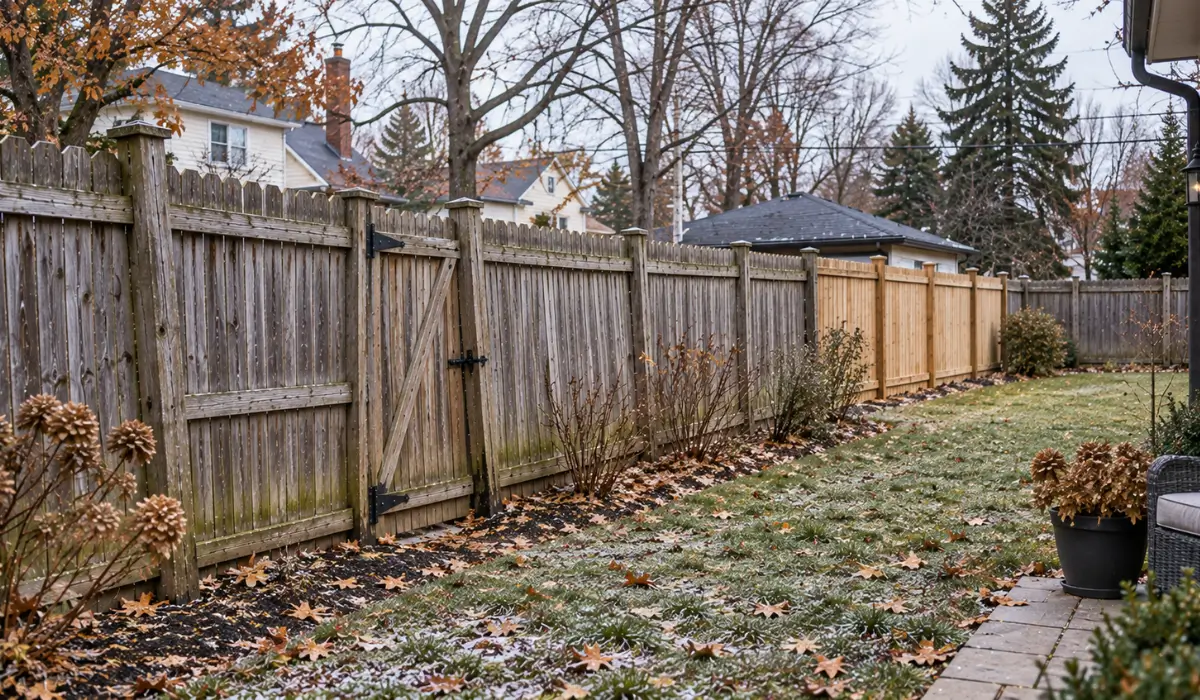
Fence replacement may be worth planning before winter when posts move, panels lean, rot or corrosion affects several sections, or repairs keep failing. Freezing temperatures, moisture, snow, wind, and ground movement can place more stress on a fence that is already weak.
For Oak Park and Chicago-area homeowners, fall is a good time to assess the entire fence rather than wait for a winter failure. Since 1977, Suburban Fence has helped homeowners decide whether damage calls for repair, partial rebuilding, or full replacement.
If you are deciding whether to replace a fence before winter, inspect the whole fence, compare the damage with fence replacement options, and plan around the property and season.
ARTICLE GUIDE
Table of Contents
Select a section to jump directly to that topic.
01
Why winter can worsen an already weak fence
→
02
Signs your fence may need replacement
→
03
What cracked or moving posts mean
→
04
Repair, partial replacement, or full replacement
→
05
How frost damage affects fence posts
→
06
When outdated fence issues justify an upgrade
→
07
Why autumn fence planning matters
→
08
What affects replacement cost and timing
→
09
How Suburban Fence evaluates the fence
→
10
Frequently asked questions
→
Why Can Winter Worsen an Already Weak Fence?
Winter does not automatically destroy a fence, but moisture, freezing conditions, snow weight, wind, and ground movement can worsen existing weaknesses.
Water around posts or damaged wood can expose soil, footing, or support problems. Snow, ice, and wind can stress weak panels and loose sections, while shifting posts may cause gates to drag or stop latching.
| Existing Condition | Winter May Make It More Noticeable |
|---|---|
| Loose or leaning post | More movement |
| Weak panel | Bowing or broken connections |
| Misaligned gate | Dragging or latch failure |
| Damaged wood | Larger cracks or weak areas |
| Corroded hardware | Looser connections |
For Oak Park and Chicago-area fences, the concern is winter stress acting on a fence that already shows movement or deterioration.
What Are the Clearest Signs a Fence May Need Replacement?
Replacement becomes more likely when damage is widespread, key parts are failing, or repairs no longer restore stability and function.
Check for these signs:
- Several posts move or lean.
- Posts are rotted, corroded, or deeply split.
- Multiple panels are warped, broken, or detached.
- Rails repeatedly pull away.
- The gate will not stay aligned.
- Large gaps affect privacy, security, pets, or children.
- Rust or decay affects several areas.
- Repairs keep failing in the same section.
- Replacement parts are unavailable or incompatible.
- The fence no longer meets household needs.
- Storm or impact damage affects a large portion.
- The fence appears at risk of collapse.
Cracked posts deserve more attention when cracks are deep or appear with movement. One cracked board does not usually justify a complete replacement. Several moving posts or widespread deterioration require a broader assessment.
Use the Before-Winter Fence Replacement Checklist to record damage, movement, gate problems, drainage concerns, and previous repairs.
What Do Cracked, Leaning, or Moving Posts Mean?
Fence posts support the rails, panels, and gates, so post movement often matters more than surface damage to one board or picket.
Surface Checking Versus Structural Cracking
Small surface checks do not necessarily make a wood post unsound. Deep splits near connections or the ground line deserve closer attention, especially when the post moves.
Why Several Leaning Posts Matter
A leaning fence involving several posts may indicate problems with footings, drainage, soil movement, impact damage, or previous repairs.
Gate-Post Failure
Sagging, latch failure, loose hinges, or movement near the footing can point to a post problem rather than a simple gate adjustment.
Professional fence repair may be appropriate when post or gate movement is isolated and the surrounding fence remains structurally sound.
Should You Repair, Partially Replace, or Fully Replace the Fence?
Repair fits isolated damage more often, while partial or full replacement becomes more reasonable as problems spread.
| Fence Condition | Repair | Partial Replacement | Full Replacement |
|---|---|---|---|
| One loose board or picket | Likely | No | No |
| One failed rail or panel | Likely | Sometimes | Rarely |
| One damaged fence run | Sometimes | Often | Sometimes |
| One damaged gate or post area | Sometimes | Often | Rarely |
| Several moving posts | Limited | Possible | Assess |
| Widespread rot or corrosion | Rarely | Sometimes | Often |
| Repeated gate or post failure | Sometimes | Often | Possible |
| Parts no longer match or fit | Limited | Often | Sometimes |
| Fence no longer meets property needs | Limited | Possible | Assess |
| Damage across most sections | Rarely | Limited | Often |
Repair Is More Likely When
Repair fits isolated damage when posts and surrounding sections remain stable
Partial Replacement Is More Likely When
A partial fence replacement can address one failing run, gate area, or section while sound portions remain
Full Replacement Is More Likely When
Fence replacement becomes more reasonable when problems affect several sections or repairs repeatedly fail.
A few rotted fence posts or one rusted fence section do not automatically require full replacement. The condition of the whole fence matters more than one damaged panel.

How Can Frost Damage Affect Fence Posts?
Frost damage may occur when moisture in soil freezes, expands, and contributes to movement around a footing or post. The effect varies with soil, drainage, installation, exposure, existing damage, and winter conditions.
Movement can lift, tilt, or loosen posts and affect gate alignment. Freeze-thaw damage and frost heave should not be diagnosed from appearance alone.
Not every post experiences frost heave, concrete does not prevent every type of movement, and one footing depth does not suit every property. Signs can include shifted posts, misaligned gates, uneven panels, exposed footings, or repaired sections that moved again.
When Do Outdated Fence Issues Justify Replacement?
Outdated fence issues may justify replacement when the fence still stands but no longer works well for the household. Age alone is not a reason to replace it.
Replacement may make sense when:
- privacy, pet, child-safety, or access needs change;
- material or spacing no longer fits the property;
- gate placement or layout causes practical problems.
Material needs can change too. Wood fence installation allows for custom construction on site, while vinyl fence installation provides another material option.
Usable sections do not automatically need replacement when another section needs an upgrade.
Why Does Autumn Fence Planning Matter?
Autumn fence planning gives homeowners time to assess the work and prepare before winter conditions arrive.
- Inspect and photograph: Record damaged posts, panels, gates, and drainage areas.
- Define the goal: Identify repair, replacement, privacy, or access needs.
- Review property information: Gather property documents and note HOA, permit, utility, and access questions. Illinois excavation projects use the Illinois utility-location service for participating utilities.
- Compare options: Consider materials, gates, maintenance, and yard use. The end-of-summer fence checklist can help identify seasonal problems.
- Request an estimate: Fall planning does not guarantee winter completion, lower pricing, faster permits, or material availability.
What Affects Fence Replacement Cost?
Fence replacement cost depends on material, length, height, removal, access, slope, footing conditions, gates, permits, disposal, and design.
Grade, roots, drainage, existing footings, and narrow access can change the work required. Chicago-area projects may also need planning when cold weather or ground conditions affect fence installation.
For a fence replacement estimate, have photos, approximate length, material preferences, gate needs, access concerns, and property documents ready.
Use the Before-Winter Fence Replacement Checklist to organize these details before discussing the project.
How Suburban Fence Evaluates a Fence Before Winter
Suburban Fence evaluates the fence as a system before explaining repair, partial replacement, or full replacement options.
An assessment looks beyond one damaged panel to posts, footings, rails, gates, drainage, grade, and access. This helps separate isolated damage from wider problems.
Suburban Fence has served the Chicago area since 1977 and uses in-house crews rather than subcontracted installers. Wood fencing and gates can also be built for the specific project.
When comparing local fencing contractors, ask whether they assess the full fence before recommending replacement. A qualified residential fence contractor should explain why the proposed work fits the fence and property.
Fence Replacement Before Winter FAQs
Should I replace my fence before winter?
Consider replacement when several posts move, damage is widespread, or repairs keep failing.
Can cracked fence posts survive another winter?
Some can. Crack depth, movement, rot, and footing condition matter more than a crack alon
Can frost heave damage a fence?
Yes. Frost heave can contribute to post or footing movement under some conditions.
Is it better to repair or replace a leaning fence
Repair may fit one affected section. Several leaning posts require a broader assessment.
Can only part of a fence be replaced?
Yes. A partial fence replacement can work when one section fails while the rest remains sound.
What affects fence replacement cost?
Material, size, gates, removal, access, property conditions, permits, and custom work can affect cost.
When should I request a fence replacement estimate?
Request a fence replacement estimate when warning signs appear or repairs keep failing. After winter, also check the signs a fence needs replacing before spring.
BEFORE WINTER
Decide What Your Fence Needs Before Winter
A fence does not need replacement simply because winter is coming. Replacement becomes more reasonable when instability or deterioration affects several sections and repairs no longer restore dependable use.
POSSIBLE NEXT STEP
Repair
→
Partial Replacement
→
Full Replacement
✓
PLANNING RESOURCE
Before-Winter Fence Replacement Checklist
Organize damage, repair history, and project goals before deciding what the fence needs.
Not sure which option fits?
Oak Park and Chicago-area homeowners can request a fence assessment before deciding on the scope of work.
Request a Fence Assessment
→
Assess existing damage
•
Review previous repairs
•
Determine an appropriate scope